

 By brandVahle · Germany
Sole Agent in Egypt
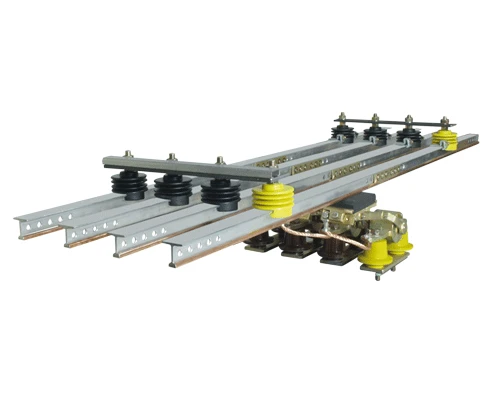
While working in a steel mill in 1912, Paul Vahle began designing more effective and safer methods of mobile power transfer. At the time, the common method was traveling wires which did not provide a secure contact, generated a lot of sparks and broke easily and often. The result of his efforts was the original open conductor bar, which is still used today. The standard version is a copper bar mounted onto a T-Shaped steel beam. The copper bar transfers the electrical current safely while the T-bar provides a robust and reliable mount.
SYSTEM TYPES
| Profile | Type | Rail Profile | Conductor | Max Amp @ 60% | Selection Guide | Downloads |
| L20
A20 |
Steel
Aluminum |
Copper
Copper |
580
580 |
|
||
| F35
A35 |
Steel
Aluminum |
Copper
Copper |
940
1035 |
|
||
| F45
A45 |
Steel
Aluminum |
Copper
Copper |
940
1870 |
|
||
| C20-60 | Copper | Copper | 3050 |
|
PRODUCT ADVANTAGES
- Robust design suitable for any environment
- Low maintenance equals cost savings
- Curve sections available for custom applications
- Ideal solution for high voltage/amperage requirements
Key specifications
| Rated current | 220 – 2,360 A |
|---|---|
| Conductor cross-section | 36 – 1,200 mm² |
| Rated voltage | 1,000 V AC (6,000 V option) |
| Conductor material | Steel-copper, aluminium-copper or copper |
| Number of poles | Unlimited |
| Max. travel speed | 250 m/min |
Main figures from the manufacturer. Ask our team for the exact model and options for your application.